16 Shades
Content directory
Framework & classification
How does this relate to MBTI?
The two labels add layers to the portrayal; they do not convert one test into the other.
Creative interpretation & theory referenceHow can cognitive functions relate to our four axes?
Think of cognitive functions as a language for how someone attends to information and makes judgments, and our four axes as a language for what someone prioritizes and does in a shadow situation.
Creative interpretation & theory referenceWhy can the same shadow role look so different?
A role describes a path; real people still travel it at different speeds, in different tones, and with different tools.
Creative interpretation & theory referenceWhy can people with the same MBTI type have different shadow roles?
The four letters offer a familiar entry point, but they do not capture every difference in how people handle gain, control, conflict, and norms.
Project definitionModel overview: four axes describe style, five dimensions describe harmfulness
This framework explores how people tend to act around gain, competition, control, and conflict.
Project definition16 types and four families
Start with a recognizable character archetype, then use the four axes to understand the logic of its actions.
Model assumptionHow are the estimated population shares of the types calculated?
A reproducible hypothetical scenario; the actual population shares are currently unknown.
Axes & situations
Harm: Instrumental and Punitive
Once the external goal is achieved or the damage is repaired, when does the conflict end?
Project definitionGoal: Gain and Control
When you cannot keep both the practical benefit and the final say, which matters more?
Project definitionMeans: Strategy and Pressure
Do you tend to rearrange information, relationships, and options, or set conditions and consequences directly?
Project definitionNorms: Justification and Disregard
When acting in a questionable way, how do you handle respectability, rules, and the judgment of onlookers?
Character interpretationThree everyday situations: putting choice back into type
See how the four axes help frame questions about a project, making amends, and dividing responsibilities.
Limits & evidence
Matches, ties, and limits of use
Results are a starting point for reading, not a diagnosis, a probability, or a final judgment of anyone.
External theoretical referenceTheoretical sources and limits of use
The project draws on related theories to ask questions, without presenting external research as validation of its 16 types.
Relationships
How Do We Understand the Relationship Between Two People?
A complete middle-layer method that separates character tendencies, interaction mechanisms, and situational storytelling.
Project definitionRelationship map: from two people to a situation
Relationships emerge from both participants’ responses, circumstances, and choices. Types only provide a way into the questions.
Interaction mechanisms
M01 | Alliances and contests for position
How shared goals, dependence, and alternatives create alliances and struggles for position.
Project definitionM02 | Mirrors and complementarity
How shared language, shared blind spots, and the current division of work shape interaction.
Project definitionM03 | Different accounts of a relationship
How each person understands help, exchange, obedience, fairness, and debts.
Project definitionM04 | Escalation and ceasefires
Who wants change now, how responses escalate, and where the cycle can stop.
Project definitionM05 | Frontstage and backstage
How audiences, approval from norms, and responsibility change public and private interaction.
Project definitionM06 | Exceptions and mutual shaping
How responses to a particular person and freely offered support create exceptions in a relationship.
Psychology references
Why We Cannot Look Only at “What Each Person Is Like”
An accessible guide to outside research: the questions it addresses, the evidence behind it, and the limits of its application.
External theoretical referenceWhere Does Power in a Relationship Come From?
An accessible guide to outside research: the questions it addresses, the evidence behind it, and the limits of its application.
External theoretical referenceWhat Exactly Does “Complementarity” Mean?
An accessible guide to outside research: the questions it addresses, the evidence behind it, and the limits of its application.
External theoretical referenceDoes a Smooth Interaction Rhythm Mean a Good Relationship?
An accessible guide to outside research: the questions it addresses, the evidence behind it, and the limits of its application.
External theoretical referenceDo Similar People Really Like Each Other More?
An accessible guide to outside research: the questions it addresses, the evidence behind it, and the limits of its application.
External theoretical referenceWhy Can the Same Help Be Entered in Two Different Ledgers?
An accessible guide to outside research: the questions it addresses, the evidence behind it, and the limits of its application.
External theoretical referenceWhy Does One Person Pursue While the Other Withdraws?
An accessible guide to outside research: the questions it addresses, the evidence behind it, and the limits of its application.
External theoretical referenceA Ceasefire Is Not Surrender: How Destructive Impulses Get Interrupted
An accessible guide to outside research: the questions it addresses, the evidence behind it, and the limits of its application.
External theoretical referenceWhy Does the Public Story Change—and How Does Someone Come to Believe It?
An accessible guide to outside research: the questions it addresses, the evidence behind it, and the limits of its application.
External theoretical referenceWhy “Only You” Cannot Be Calculated from a Type Chart
An accessible guide to outside research: the questions it addresses, the evidence behind it, and the limits of its application.
External theoretical referenceGood Support Helps You Move Toward the Person You Want to Become
An accessible guide to outside research: the questions it addresses, the evidence behind it, and the limits of its application.
External theoretical referenceWhy Does Sharing Something New Make a Relationship Light Up—Temporarily?
An accessible guide to outside research: the questions it addresses, the evidence behind it, and the limits of its application.
Theater
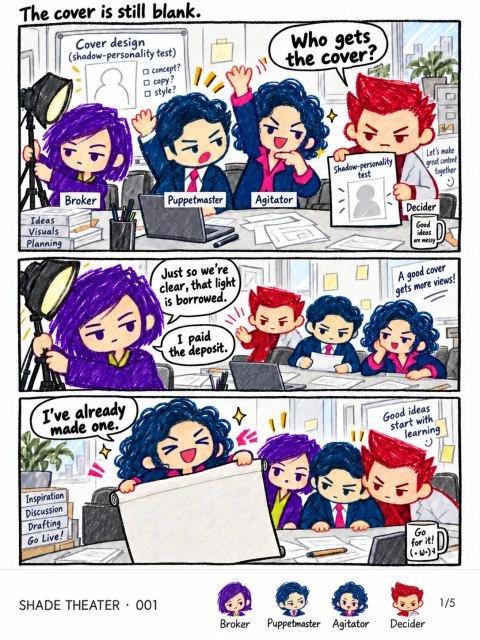 001
001The Cover Battle
One cover. Four opinions. Nobody saw the final choice coming.
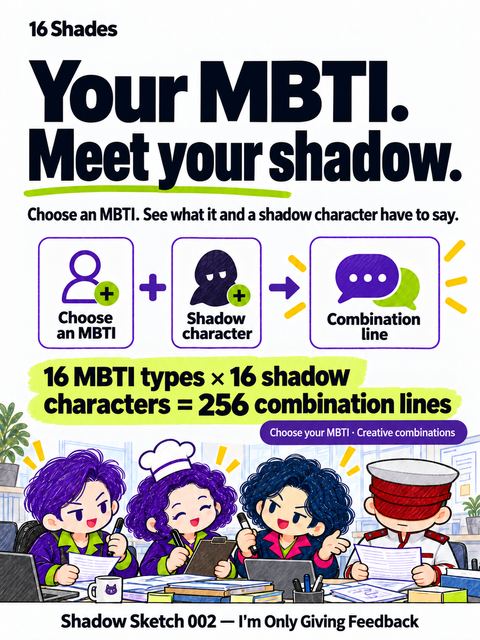 002
002Your MBTI. Meet your shadow.
They are building combination lines. The Opportunist only wants to give feedback.
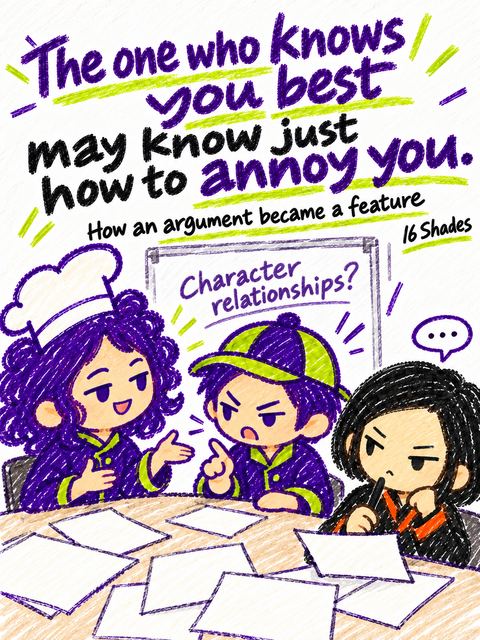 003
003Can you say that another way?
The one who knows you best may know just how to annoy you. A feature born from an argument.
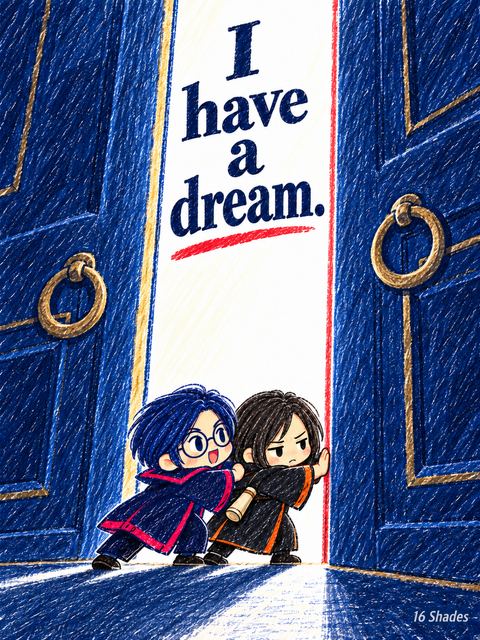 004
004I have a dream.
Once it is open, anyone could become one of us.
 005
005We Won’t Make It to Episode Six!
Five coworkers go to the beach for one group photo, then end up battling a sand sculpture, the sea, and one another’s place in the frame.
 006
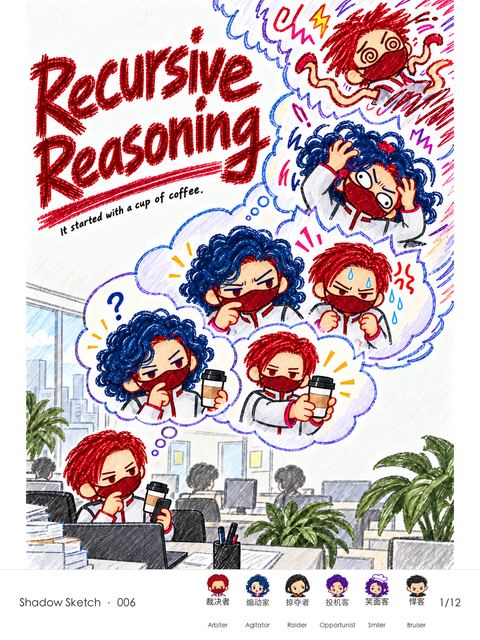
006Recursive Reasoning
A mention placed right after a pointed question sends Arbiter into layer after layer of reasoning, all over one cup of coffee.
 007
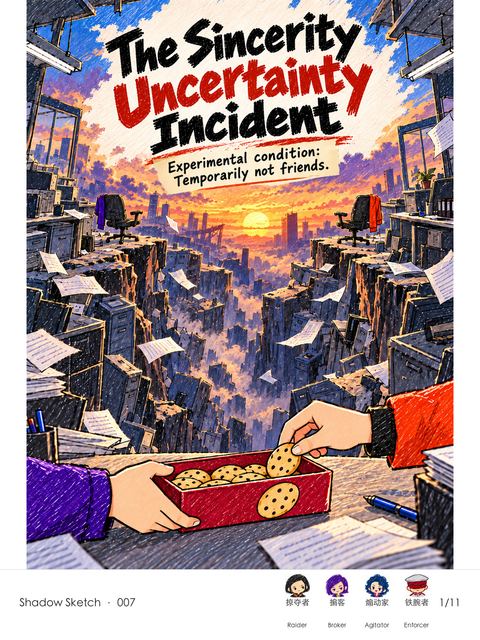
007The Sincerity Uncertainty Incident
Raider has a new haircut—and doubts every compliment. To find out whether her best friend means it, she puts their friendship on pause.
 008
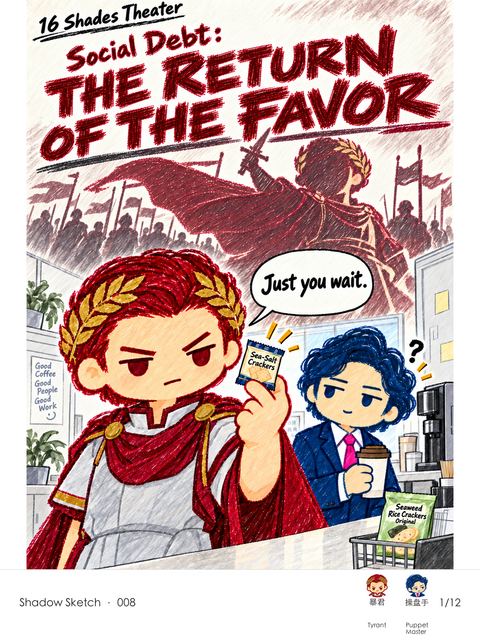
008Social Debt: The Return of the Favor
Tyrant receives a snack Puppet Master saved for him and rushes to settle the favor with escalating gifts, while Puppet Master turns the exchange into something for next time.
16 characters
Broker: traits & everyday situations | SIXTEEN SHADES
Turn favors into pathways—and pocket a little extra along the way. Explore Broker through everyday situations, strengths and shadow patterns.
Opportunist: traits & everyday situations | SIXTEEN SHADES
Every loophole looks like a shortcut. Explore Opportunist through everyday situations, strengths and shadow patterns.
Smiler: traits & everyday situations | SIXTEEN SHADES
The smile stays on; every slight still goes in the ledger. Explore Smiler through everyday situations, strengths and shadow patterns.
Pursuer: traits & everyday situations | SIXTEEN SHADES
Once they catch the trail, they will not stop until someone answers for it. Explore Pursuer through everyday situations, strengths and shadow patterns.
Harvester: traits & everyday situations | SIXTEEN SHADES
The terms sound courteous while funneling benefit after benefit your way. Explore Harvester through everyday situations, strengths and shadow patterns.
Raider: traits & everyday situations | SIXTEEN SHADES
See what you want, reach out, and take it. Explore Raider through everyday situations, strengths and shadow patterns.
Collector: traits & everyday situations | SIXTEEN SHADES
Bank the gains, then settle accountability by the book. Explore Collector through everyday situations, strengths and shadow patterns.
Bruiser: traits & everyday situations | SIXTEEN SHADES
Taking what you want is not enough; resistance carries an extra charge. Explore Bruiser through everyday situations, strengths and shadow patterns.
Puppet Master: traits & everyday situations | SIXTEEN SHADES
Everyone chooses a path, but every path leads where you planned. Explore Puppet Master through everyday situations, strengths and shadow patterns.
Agitator: traits & everyday situations | SIXTEEN SHADES
Turn emotion into the prevailing mood, then use it to push people into place. Explore Agitator through everyday situations, strengths and shadow patterns.
Power Broker: traits & everyday situations | SIXTEEN SHADES
The rules are public; the loyalty score stays hidden. Explore Power Broker through everyday situations, strengths and shadow patterns.
Cult Leader: traits & everyday situations | SIXTEEN SHADES
Win their belief, then make leaving costly. Explore Cult Leader through everyday situations, strengths and shadow patterns.
Enforcer: traits & everyday situations | SIXTEEN SHADES
The command lands hard; the explanation makes it sound necessary.. Explore Enforcer through everyday situations, strengths and shadow patterns.
Decider: traits & everyday situations | SIXTEEN SHADES
The discussion can continue. Your decision is the only one that counts. Explore Decider through everyday situations, strengths and shadow patterns.
Arbiter: traits & everyday situations | SIXTEEN SHADES
Restoring order is not enough; dissent must also be formally addressed. Explore Arbiter through everyday situations, strengths and shadow patterns.
Tyrant: traits & everyday situations | SIXTEEN SHADES
You decide who wins—and keep charging the challenger afterward. Explore Tyrant through everyday situations, strengths and shadow patterns.
Character relationships
Broker × Puppet Master: The Chip Table | SIXTEEN SHADES relationships
The Broker brings the chips into play; the Puppet Master quietly decides whose hands they ultimately land in. Explore both perspectives, possible alliances, rivalries and turning points.
Broker × Smiler: The Unsettled Tab | SIXTEEN SHADES relationships
The deal is plainly settled, yet the Smiler still keeps an uncanceled IOU beneath the plate. Explore both perspectives, possible alliances, rivalries and turning points.
Opportunist × Raider: The Easy Grab | SIXTEEN SHADES relationships
A holds the barrier halfway up as B rushes past with the entire crate. Neither asks who gets the other half. Explore both perspectives, possible alliances, rivalries and turning points.
Smiler × Power Broker: The Poisoned Perfect Score | SIXTEEN SHADES relationships
A opens the review with praise. B stamps a perfect score at the end, but attaches conditions severe enough to ruin the winner. Explore both perspectives, possible alliances, rivalries and turning points.
Pursuer × Bruiser: The Dead-End Alley | SIXTEEN SHADES relationships
A pursues the target from a dark alley to a street stall. B already has the money bag, yet publicly kicks over the target's only way out. Explore both perspectives, possible alliances, rivalries and turning points.
Harvester × Collector: The Recovery Addendum | SIXTEEN SHADES relationships
One squeezes a remainder from every page; the other wants to add even those who refused to sign to the addendum. Explore both perspectives, possible alliances, rivalries and turning points.
Raider × Decider: The Captured Flag | SIXTEEN SHADES relationships
One seizes the flag to trade for resources; the other believes it belongs planted at their own feet. Explore both perspectives, possible alliances, rivalries and turning points.
Puppet Master × Enforcer: Into Formation | SIXTEEN SHADES relationships
One arranges the reasons a group turns. The other lowers a barrier so it has no other direction to go. Explore both perspectives, possible alliances, rivalries and turning points.
Agitator × Cult Leader: Two Kinds of Fire | SIXTEEN SHADES relationships
One ignites anger in the square. The other gathers the embers into a close circle centered on one person. Explore both perspectives, possible alliances, rivalries and turning points.
Power Broker × Arbiter: Lines in Ink | SIXTEEN SHADES relationships
One moves the boundary; the other silences voices beyond it. Explore both perspectives, possible alliances, rivalries and turning points.
Enforcer × Tyrant: Floodgates | SIXTEEN SHADES relationships
Both can stop the water, but they may not agree on when to open the gates. Explore both perspectives, possible alliances, rivalries and turning points.
Decider × Decider: Head to Head | SIXTEEN SHADES relationships
Two demands to follow my lead collide, and a third route begins to appear. Explore both perspectives, possible alliances, rivalries and turning points.