Theater · 003
Can you say that another way?
The one who knows you best may know just how to annoy you. A feature born from an argument.
Open immersive readerDialogue and scene descriptions
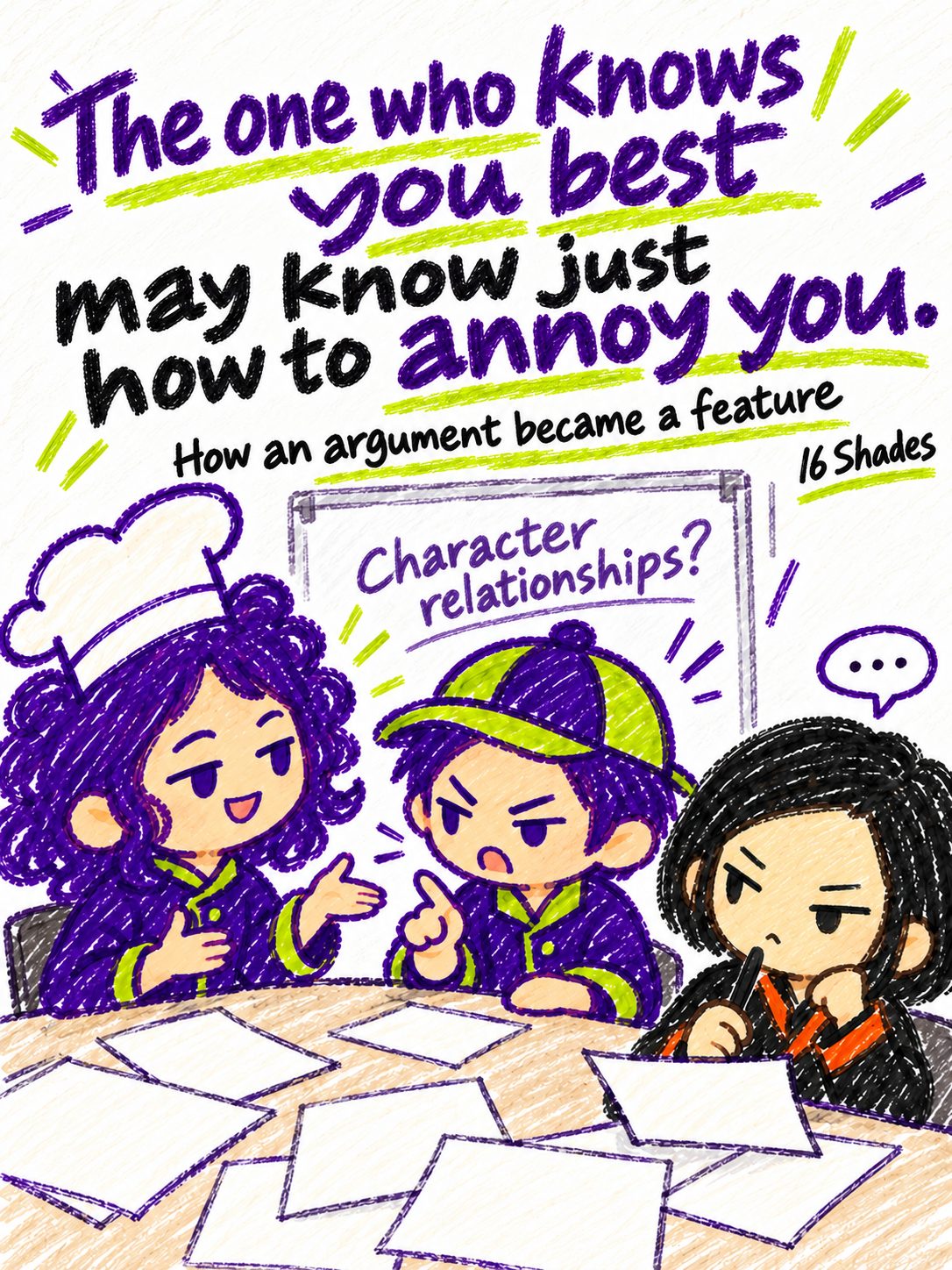
1. Cover: The one who knows you best may annoy you most
The cover shows Smiler, Pursuer, and Raider discussing character relationships around a table.
The one who knows you best may know just how to annoy you.
How an argument became a feature
16 Shades
Character relationships?
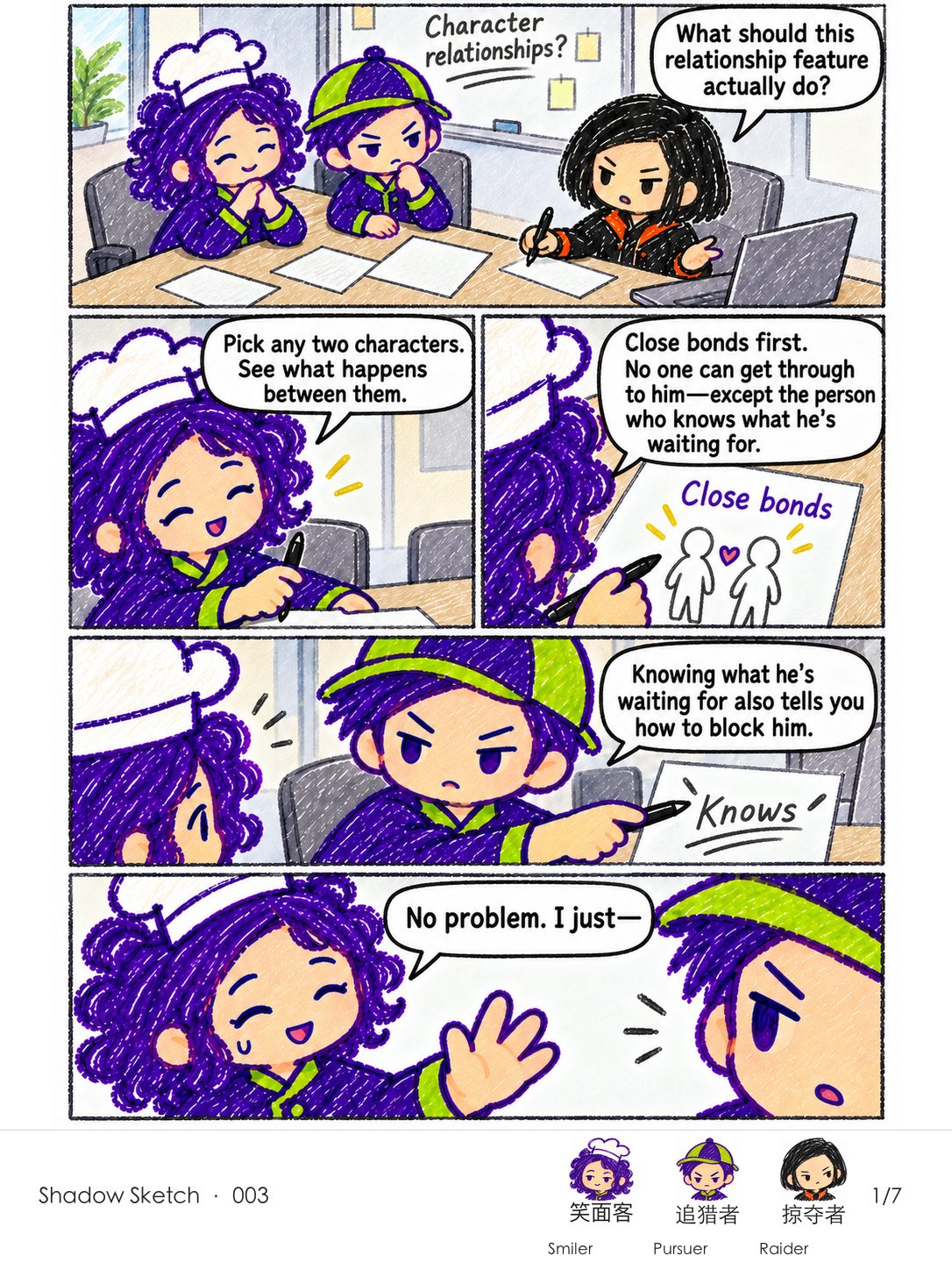
2. What should the relationship feature do?
Three colleagues start with “Character relationships?” and propose choosing two people, close bonds, and counter-moves.
What should this relationship feature actually do?
Pick any two characters. See what happens between them.
Close bonds first. No one can get through to him—except the person who knows what he’s waiting for.
Knowing what he’s waiting for also tells you how to block him.
No problem. I just—
Character relationships?
Close bonds
Knows
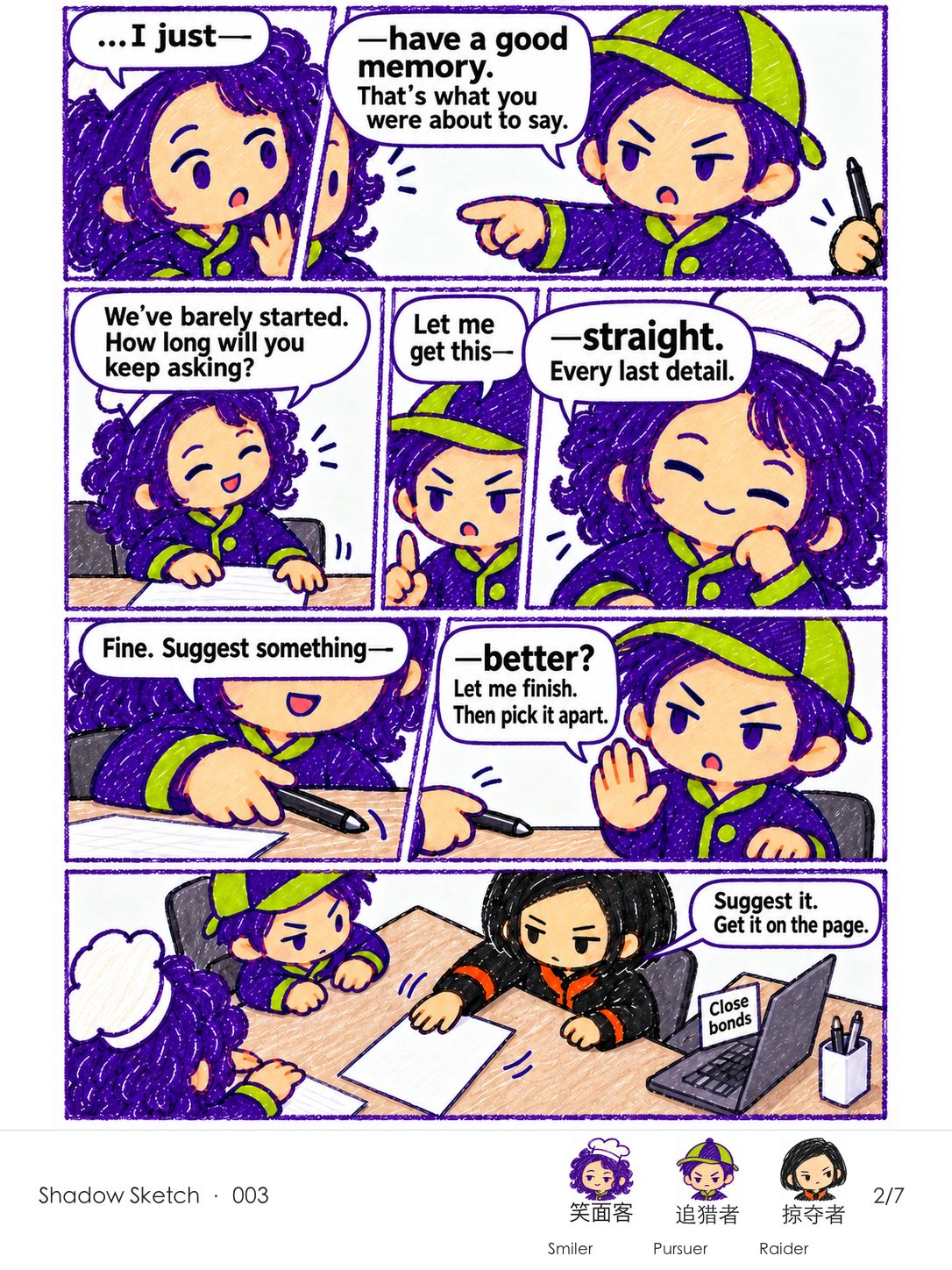
3. Finish the sentence, then pick it apart
Smiler and Pursuer keep finishing each other’s sentences while Raider asks them to put the proposal on the page.
…I just—
—have a good memory. That’s what you were about to say.
We’ve barely started. How long will you keep asking?
Let me get this—
—straight. Every last detail.
Fine. Suggest something—
—better? Let me finish. Then pick it apart.
Suggest it. Get it on the page.
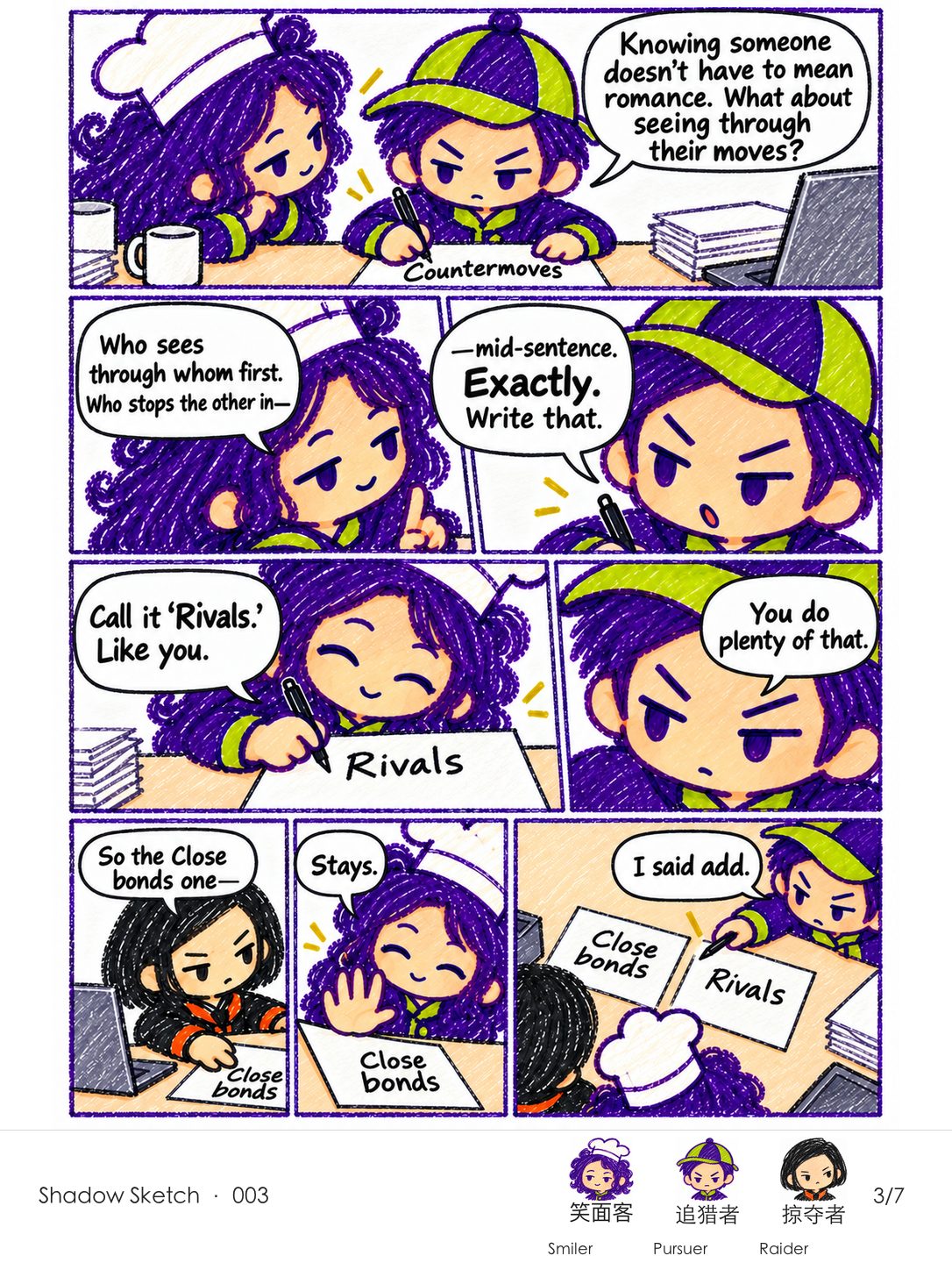
4. Call counter-moves rivals
The team adds “Rivals” to the relationship feature and argues over keeping close bonds.
Knowing someone doesn’t have to mean romance. What about seeing through their moves?
Who sees through whom first. Who stops the other in—
—mid-sentence. Exactly. Write that.
Call it “Rivals.” Like you.
You do plenty of that.
So the Close bonds one—
Stays.
I said add.
Fine. Allies stay too.
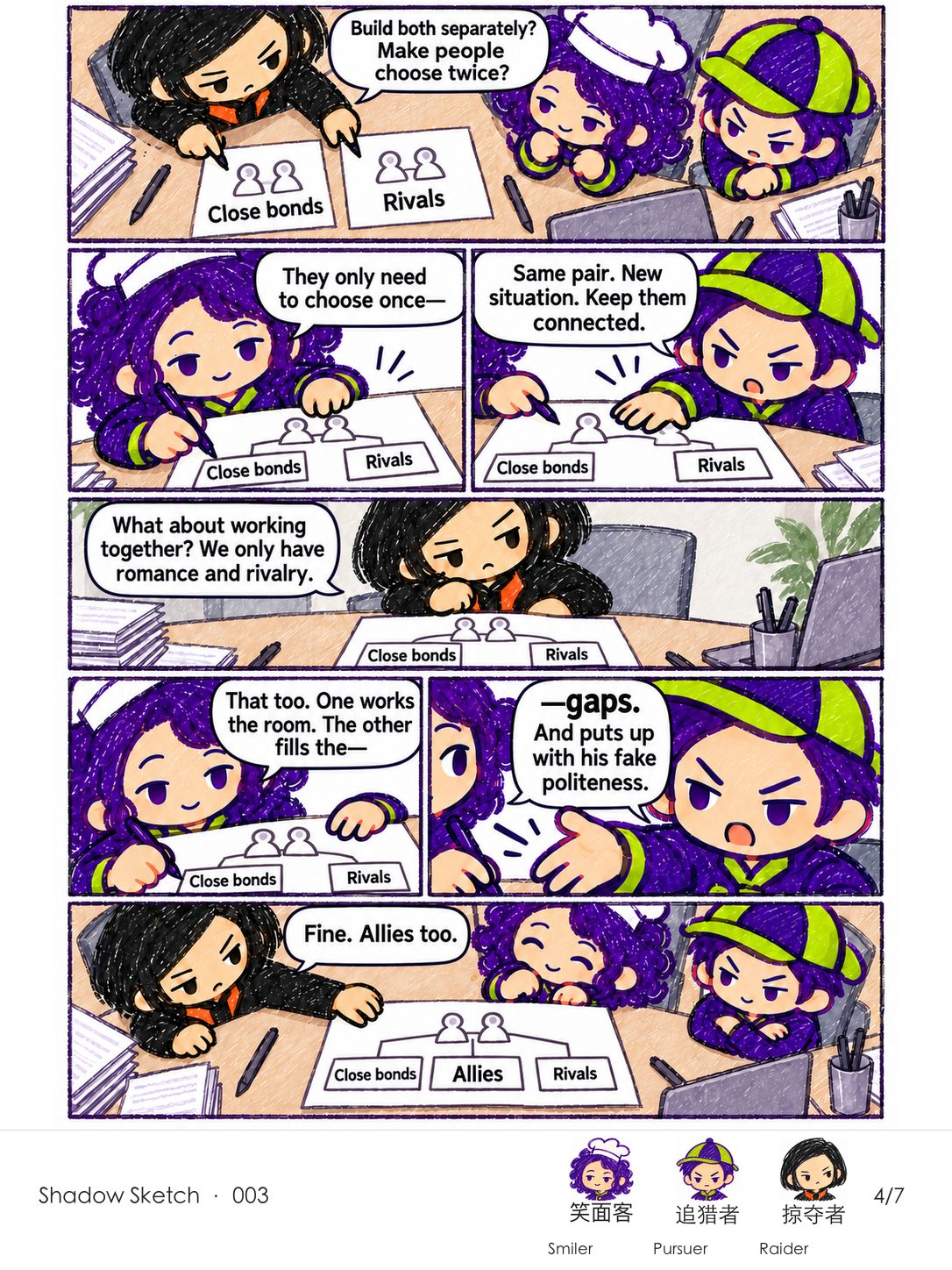
5. The same pair in another situation
They decide the same pair can switch situations while preserving how each side sees the other.
Build both separately? Make people choose twice?
They only need to choose once—
The same pair, a different situation. Keep both sides connected.
What about working together? Just talks and fights?
Write that too. One person steps in, the other fills—
—the gap. Then we still get to hear him pretend to be polite.
Fine. Allies stay.
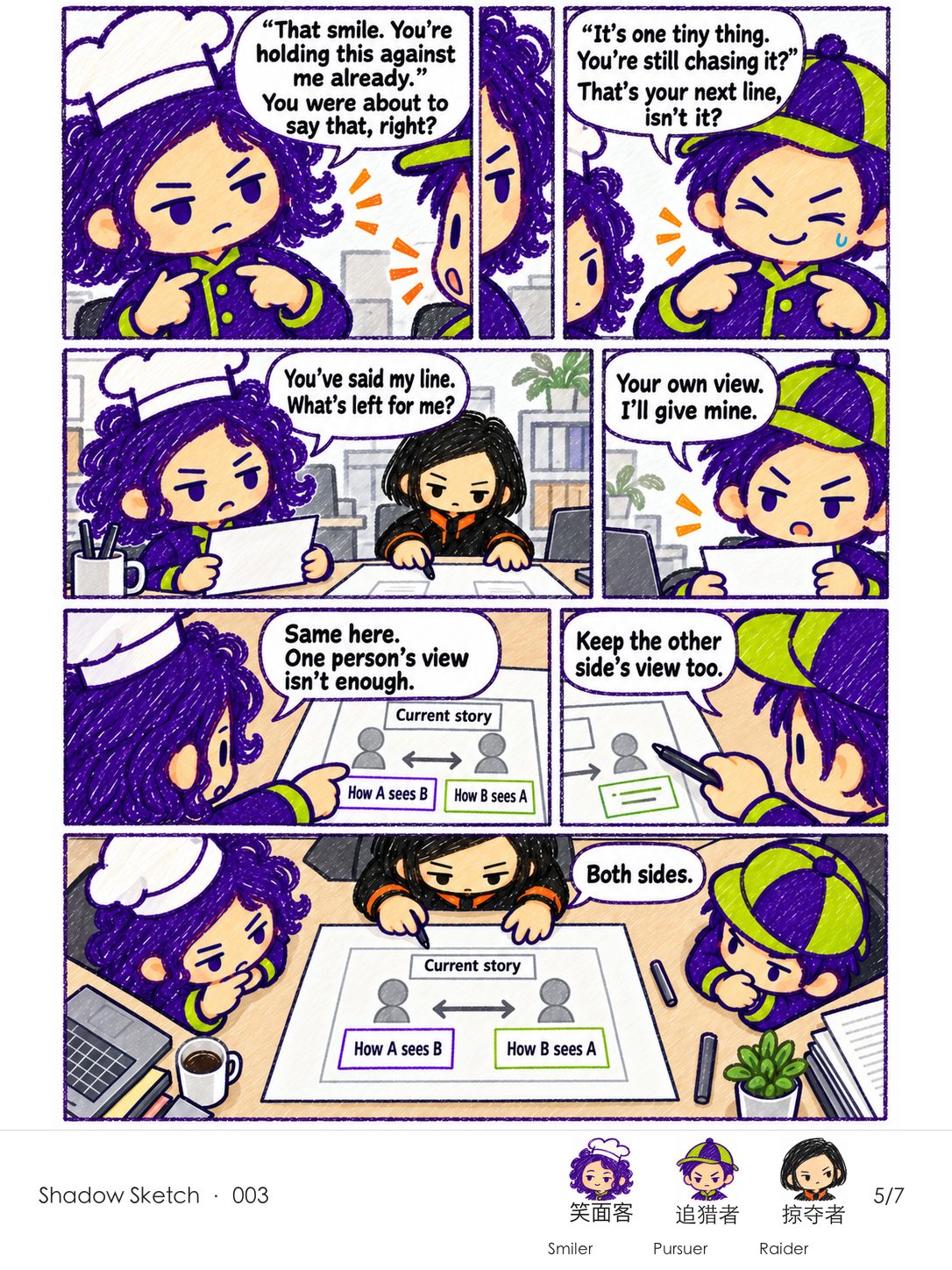
6. Keep both perspectives
The sketch labels the current story and two views: this side sees the other, and the other side sees this side.
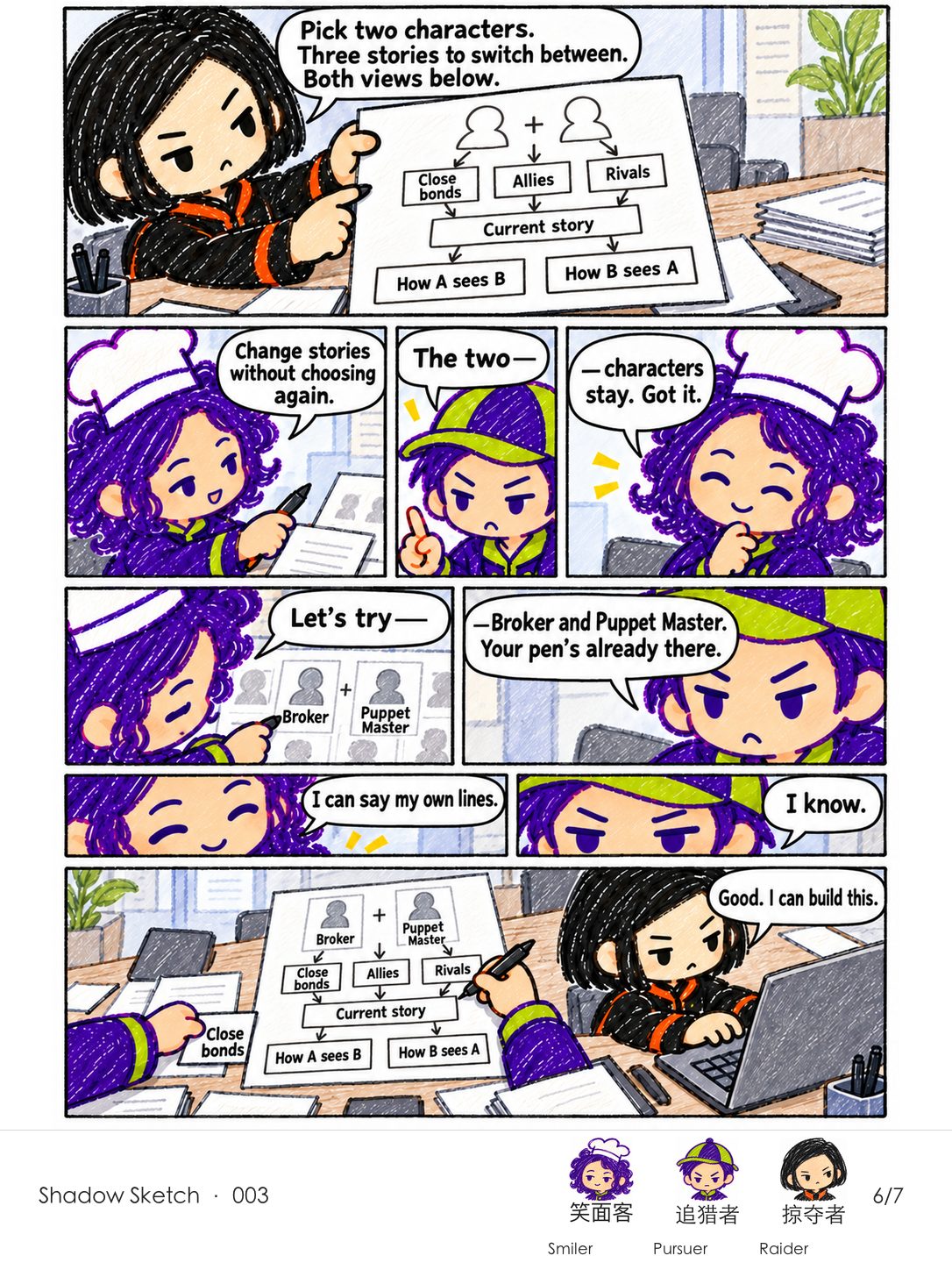
Pick two characters. Three stories to switch between. Both views below.
Change stories without choosing again.
Two—
People stay the same. Got it.
Then start with—
Broker and Puppet Master. You already wrote them down.
I’ll say this one myself.
I know.
Good. This feature can work.
Close bonds
Allies
Rivals
Current story
This side sees the other
The other sees this side
7. Three stories can switch
The page connects two people, close bonds/allies/rivals, and both views into an implementable feature.
One pair of characters, three story directions
Broker × Puppet Master | The Chip Table
Close bonds: At an auction, Broker turns down a higher offer while Puppet Master saves him a seat by the window.
Allies: One coordinates interests and favors; the other arranges the order so everyone stays at the same table.
Rivals: One accepts the higher offer; the other insists on the original arrangement, and old favors become leverage.
See both sides: how each sees the other
Broker on Puppet Master: I need your coordination, but I’m afraid you’ll steer me.
Puppet Master on Broker: You bring resources. Would you switch sides for a better offer?
Choose any two characters → Switch between Close bonds / Allies / Rivals
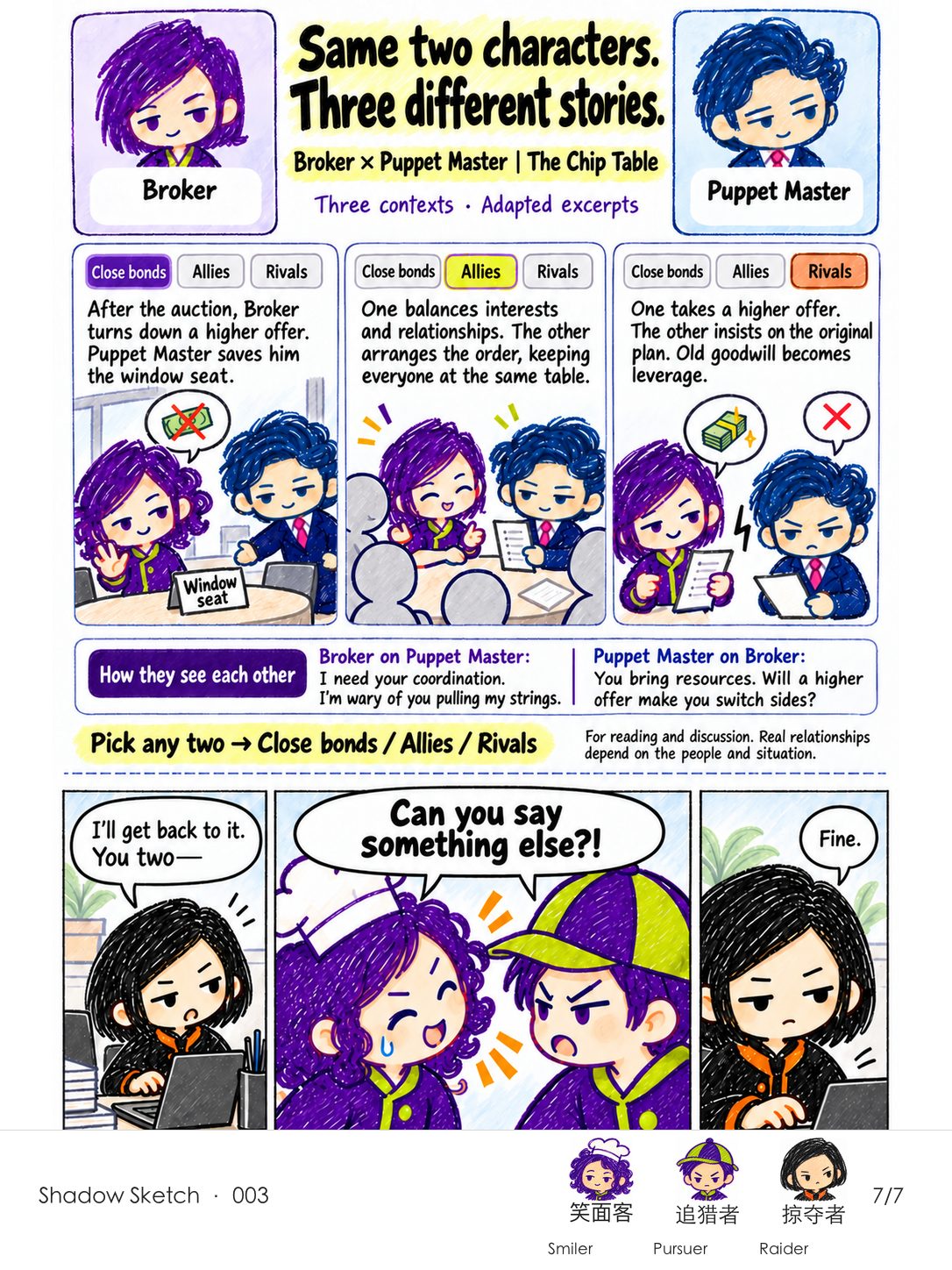
8. One pair, three story directions
The product page shows three relationship states for Broker and Puppet Master, ending with “Can you say that another way?”.
Same two characters. Three different stories.
Broker × Puppet Master | The Chip Table
Three contexts · Adapted excerpts
Close bonds: After the auction, Broker turns down a higher offer. Puppet Master saves him the window seat.
Allies: One balances interests and relationships. The other arranges the order, keeping everyone at the same table.
Rivals: One takes a higher offer. The other insists on the original plan. Old goodwill becomes leverage.
How they see each other
Broker on Puppet Master: I need your coordination. I’m wary of you pulling my strings.
Puppet Master on Broker: You bring resources. Will a higher offer make you switch sides?
Pick any two → Close bonds / Allies / Rivals
For reading and discussion. Real relationships depend on the people and situation.
I’ll get back to it. You two—
Can you say something else?!
Fine.