Character relationships / Enforcer × Tyrant
Floodgates
Both can stop the water, but they may not agree on when to open the gates.
 Enforcer
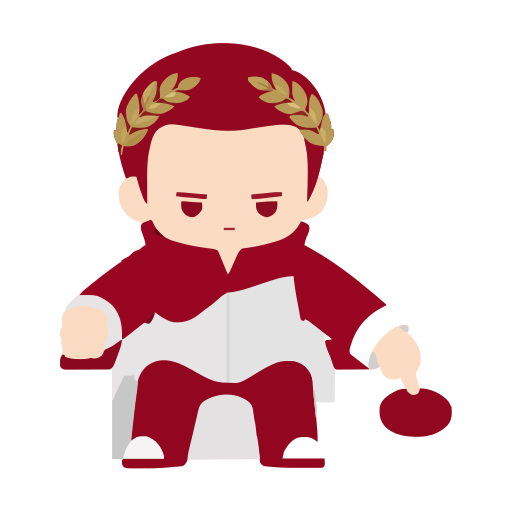 Tyrant
These character relationships are fictional scenarios for observation and discussion, not compatibility predictions. Types do not determine real relationships.
What this relationship builds on
Both favor directly asserting decision-making authority. The Enforcer explains limited control through order. The Tyrant relies less on approval from standards and may keep punishing after control is secured. They differ on both the reasons for restrictions and when those restrictions should end.
How they see each other
The Enforcer may think the other's extra demands exceed the original goal, leaving the restrictions with no defensible ending.
The Tyrant may treat a proposal to lift restrictions as a challenge to authority, overlooking their original agreement.
An alliance
Enforcer gatekeeping task with a fixed duration can temporarily align them. Who can open the gate and when the task ends must be clear before pressure arrives.
A rivalry
The agreed time has passed. One prepares to lift restrictions; the other insists that someone who challenged them must keep waiting. The gate becomes a contest over power.
A close bond
The Enforcer says they want to be alone today. The Tyrant crosses out the planned meeting. Enforcer freely offered greeting that evening matters more than a person forced to stay.
A turning point
Someone under restriction brings new evidence. Whether both allow it to change the decision can loosen or rebuild their common position.
De-escalation & boundaries
First honor the conditions already agreed for lifting restrictions, then discuss new issues separately. Pausing further action need not mean admitting defeat.