Theater · 009
The Exit
One hike. Three coworkers who all claim they were the last to leave. Collector questions them one by one, then turns to a fourth guest: a paper bag.
Open immersive readerDialogue and scene descriptions
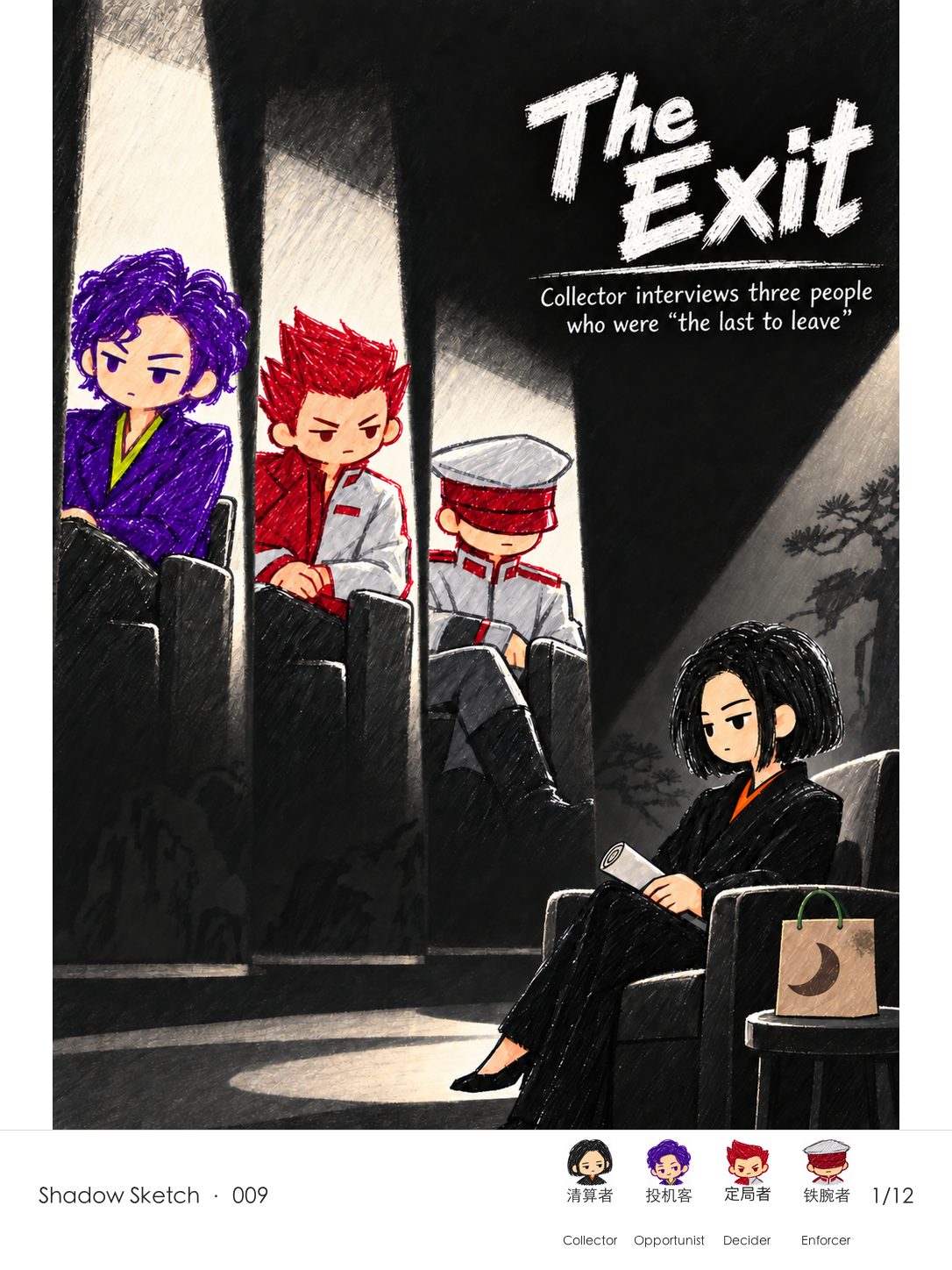
1. The Exit
Cover: Collector faces Opportunist, Decider, and Enforcer in a dark interview setting. The title is “The Exit,” and all three are described as the last person to leave.
The Exit
Collector interviews three people who were “the last to leave”
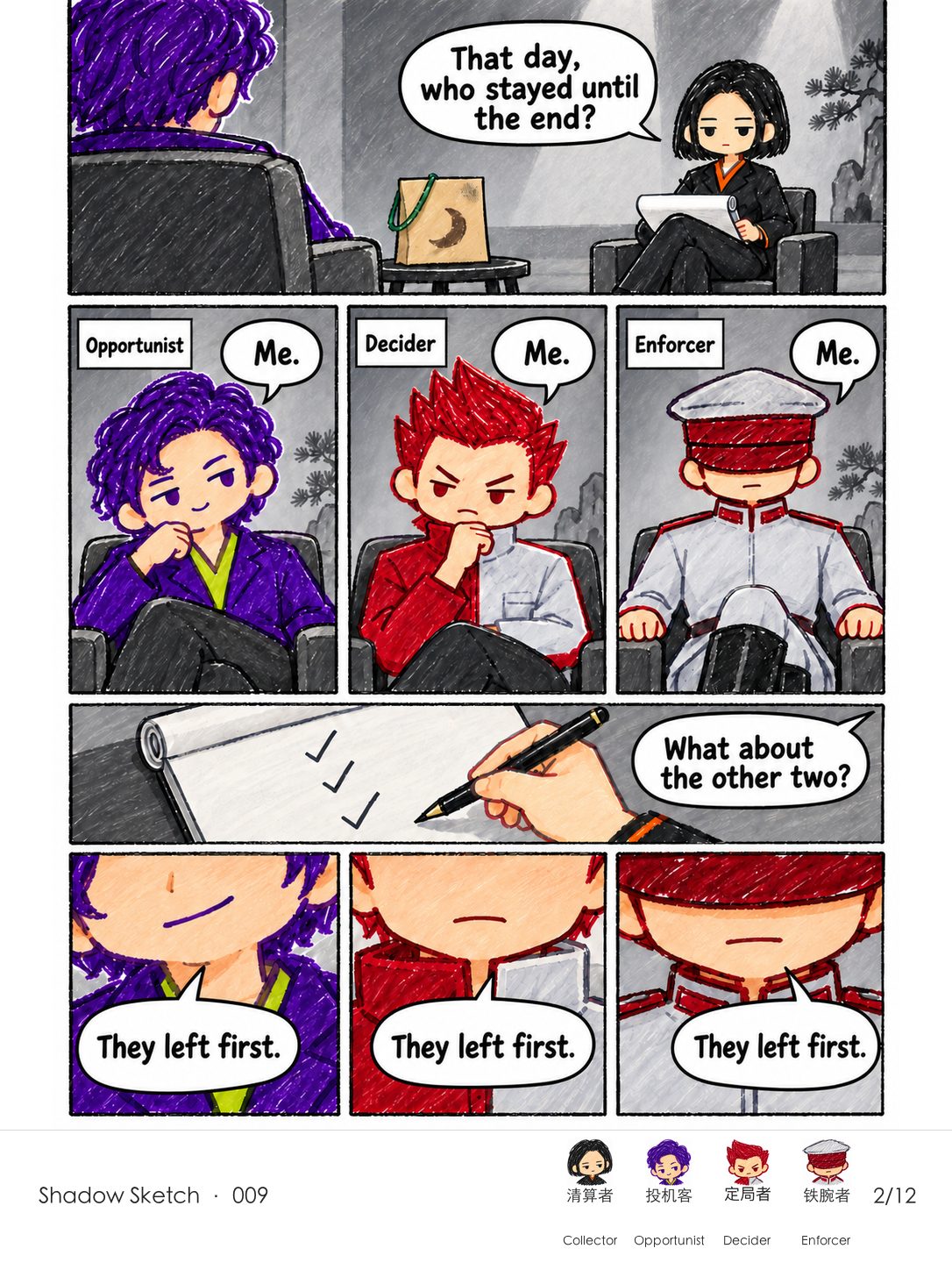
2. Who Stayed Until the End?
Collector asks who stayed until the end. Opportunist, Decider, and Enforcer each answer “Me,” then all three say the other two left first.
That day, who stayed until the end?
Opportunist
Me.
Decider
Me.
Enforcer
Me.
What about the other two?
They left first.
They left first.
They left first.
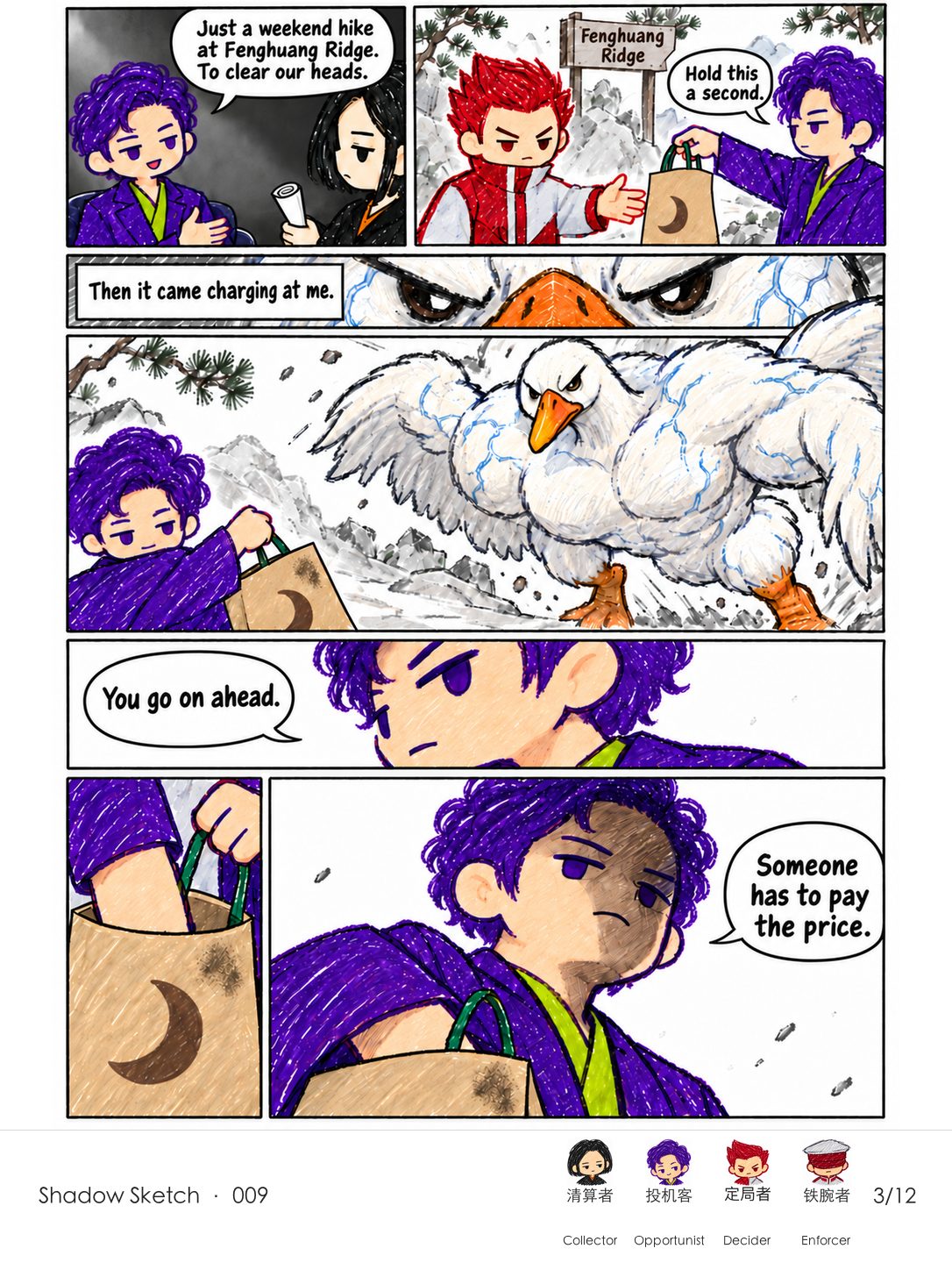
3. Someone Has to Pay
Opportunist recalls the hike from Fenghuang Ridge and handing over the paper bag. When the goose charges, he solemnly tells the others to go on ahead and says someone has to pay the price.
Just a weekend hike at Fenghuang Ridge. To clear our heads.
Fenghuang Ridge
Hold this a second.
Then it came charging at me.
You go on ahead.
Someone has to pay the price.
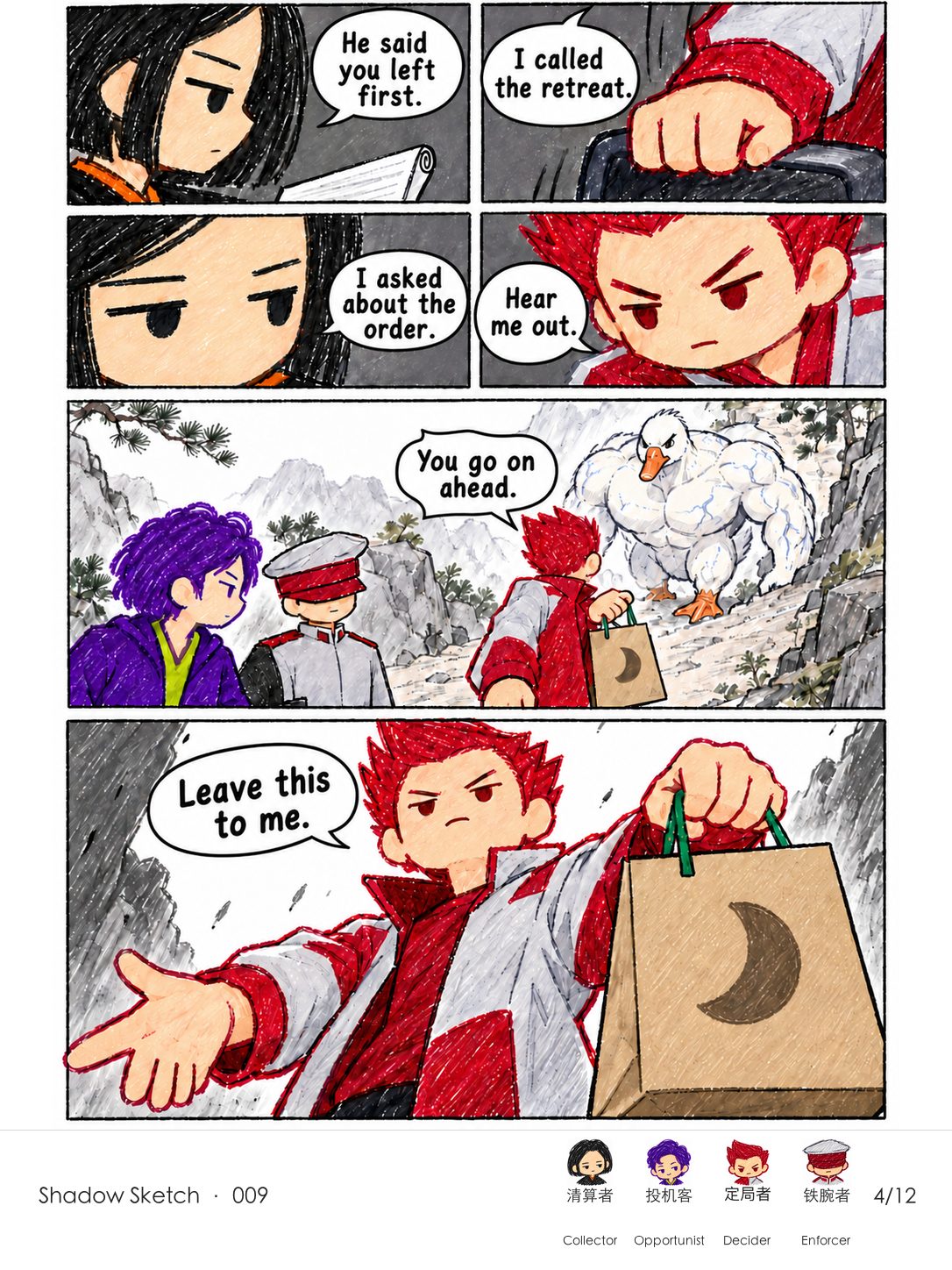
4. I Called the Retreat
Collector presses Decider about the order. Decider insists that he decided the retreat, then tells the others to go on ahead and leave this to him.
He said you left first.
I called the retreat.
I asked about the order.
Hear me out.
You go on ahead.
Leave this to me.
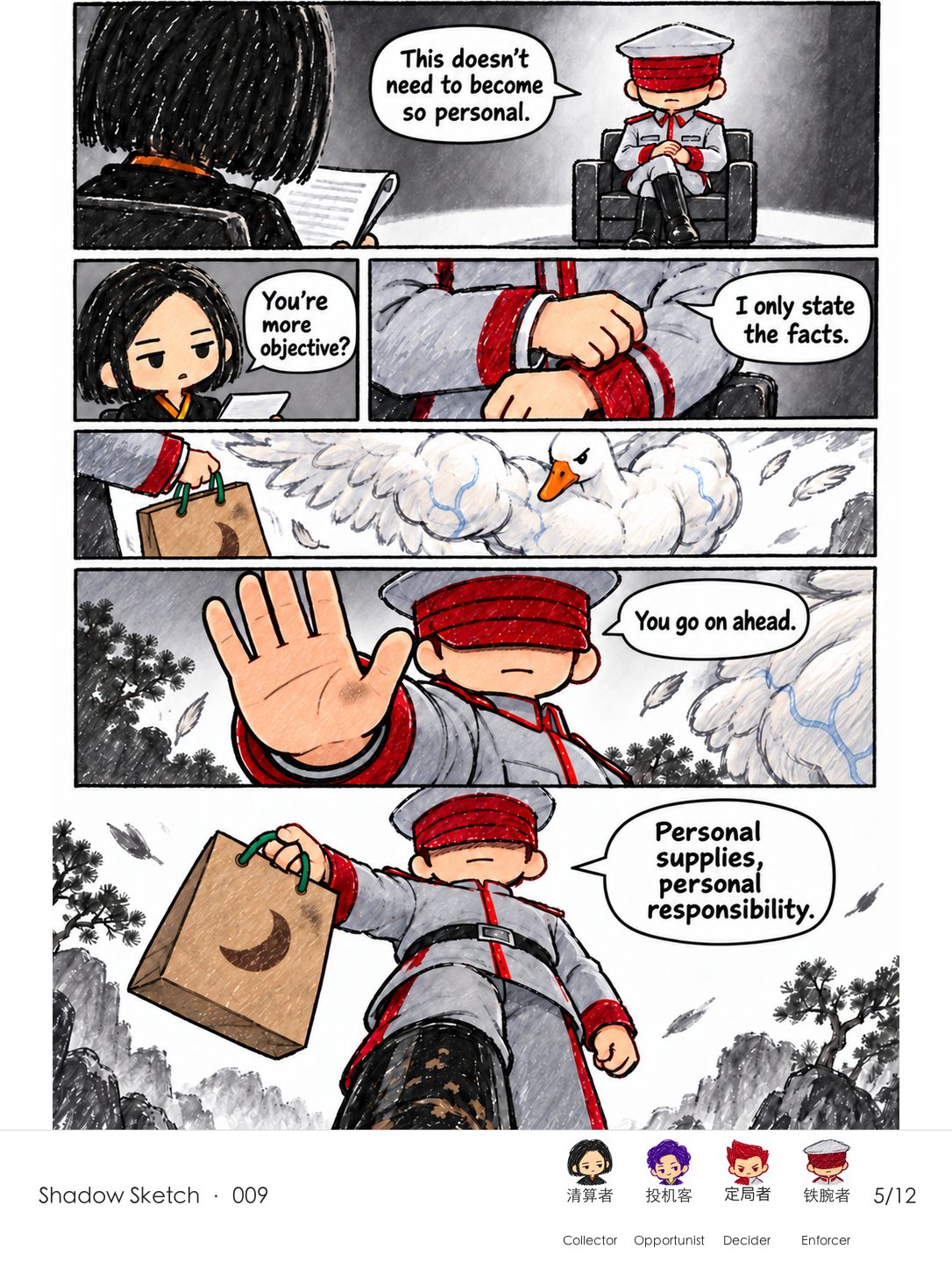
5. Personal Supplies, Personal Responsibility
Enforcer presents the episode as a matter of fact, tells the others to leave, and frames the bag and its responsibility as personal.
This doesn't need to become so personal.
You're more objective?
I only state the facts.
You go on ahead.
Personal supplies, personal responsibility.
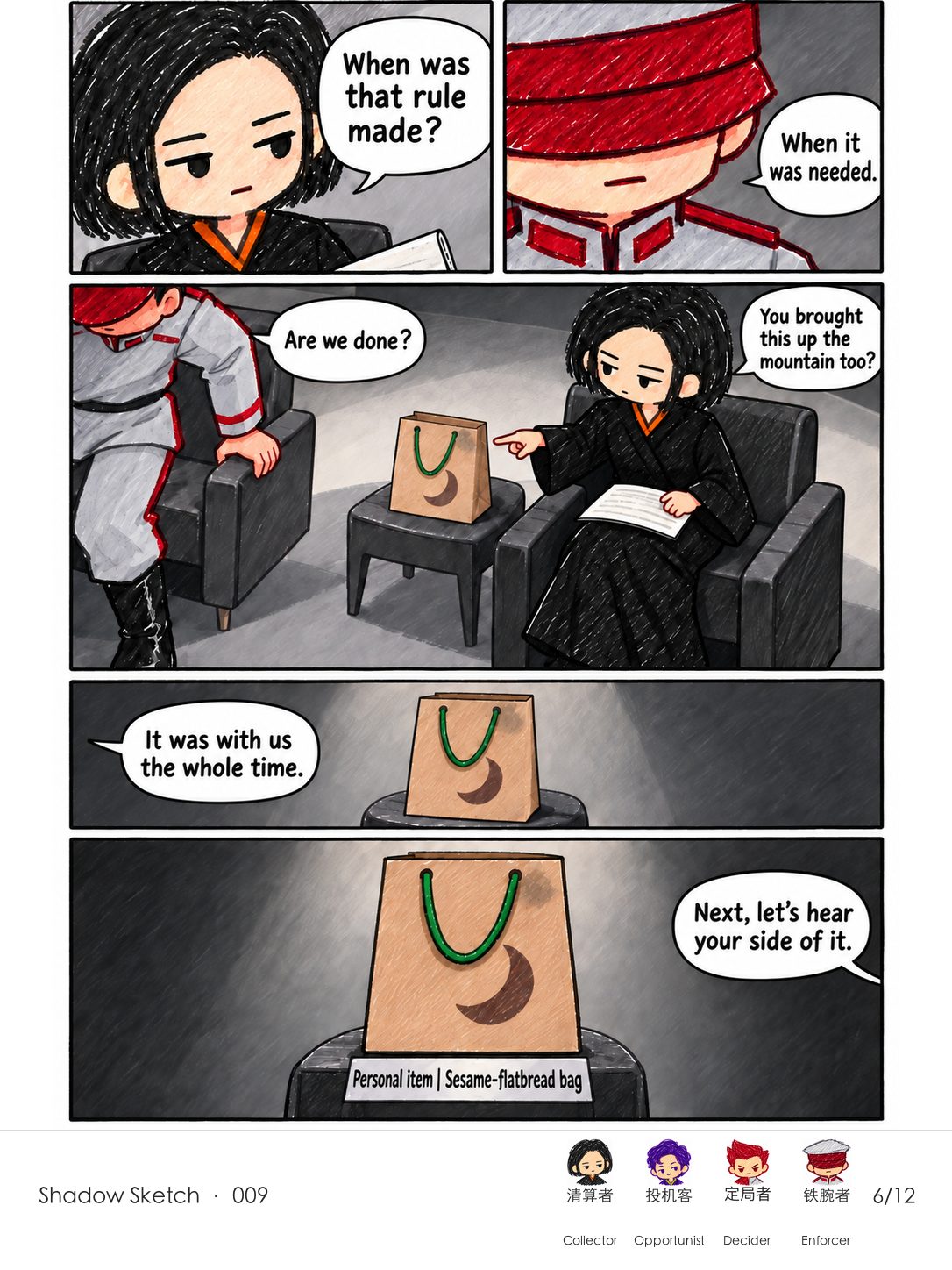
6. The Bag on the Side
Collector questions when the rule appeared and notices the sesame-flatbread bag that has been sitting beside the interview. She treats it as the next witness to hear from.
When was that rule made?
When it was needed.
Are we done?
You brought this up the mountain too?
It was with us the whole time.
Personal item | Sesame-flatbread bag
Next, let's hear your side of it.
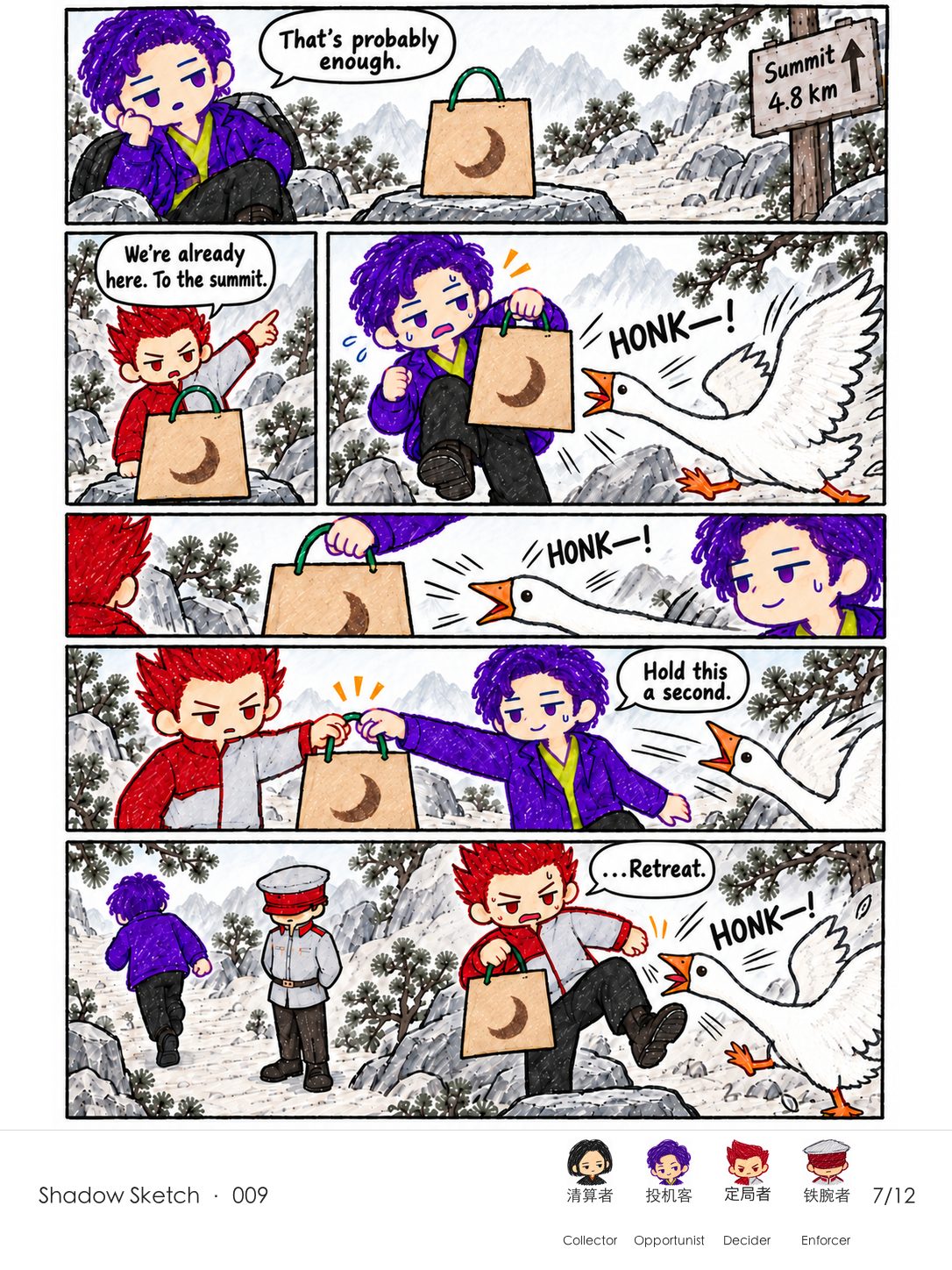
7. How It Started
The bag sits on a rock. Opportunist wants to stop hiking, but Decider insists on reaching the summit. A goose lunges. Opportunist passes Decider the bag and leaves; Decider dodges the goose and calls a retreat.
That's probably enough.
Summit 4.8 km ↑
We're already here. To the summit.
HONK—!
HONK—!
Hold this a second.
...Retreat.
HONK—!
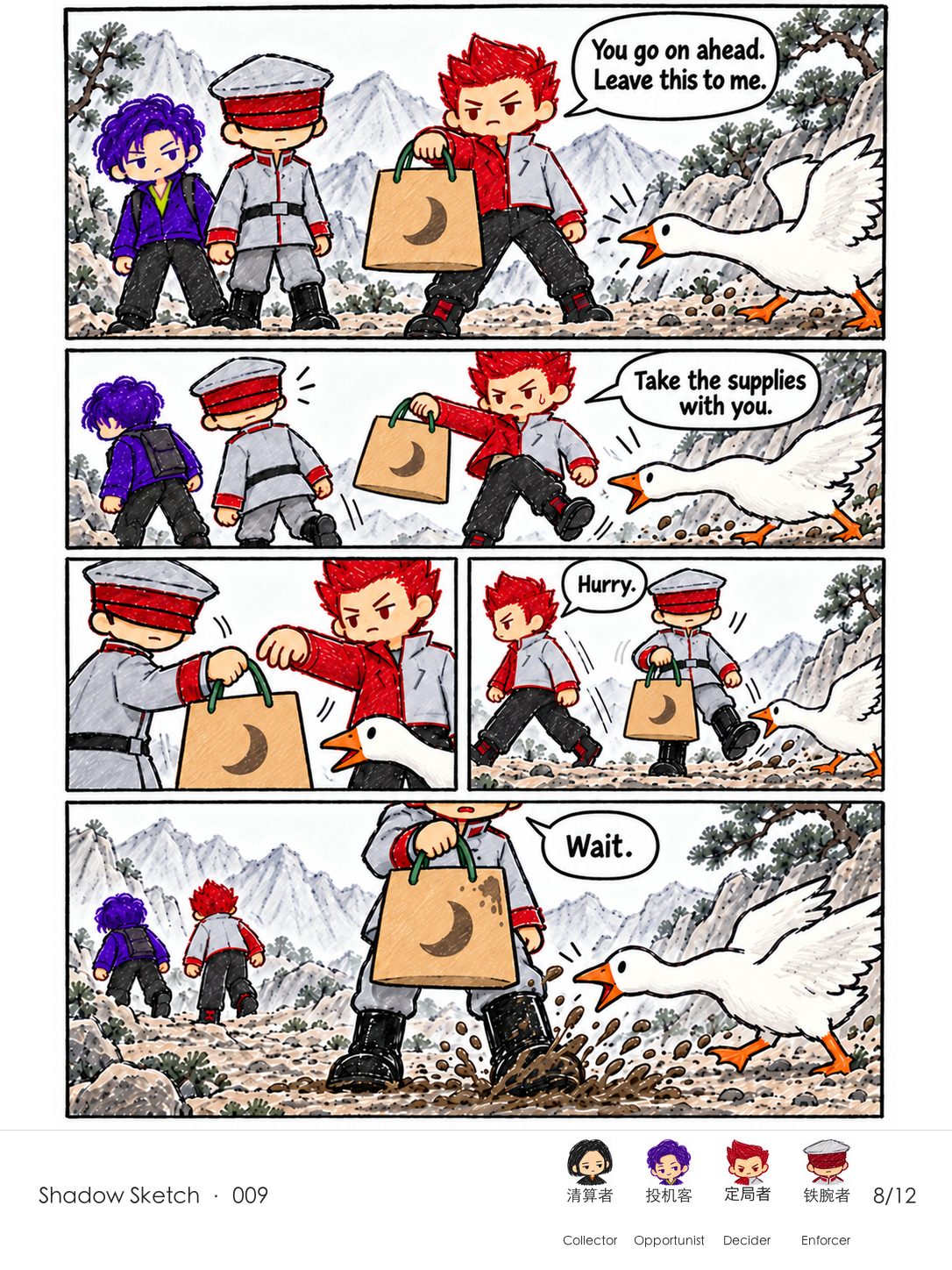
8. Pass It On
Decider tells the others to go ahead, hands Enforcer the bag, then overtakes him to the left. Dodging the goose, Enforcer steps into a puddle. Mud first splashes onto the upper-right corner of the bag, and he calls for the others to wait.
You go on ahead. Leave this to me.
Take the supplies with you.
Hurry.
Wait.
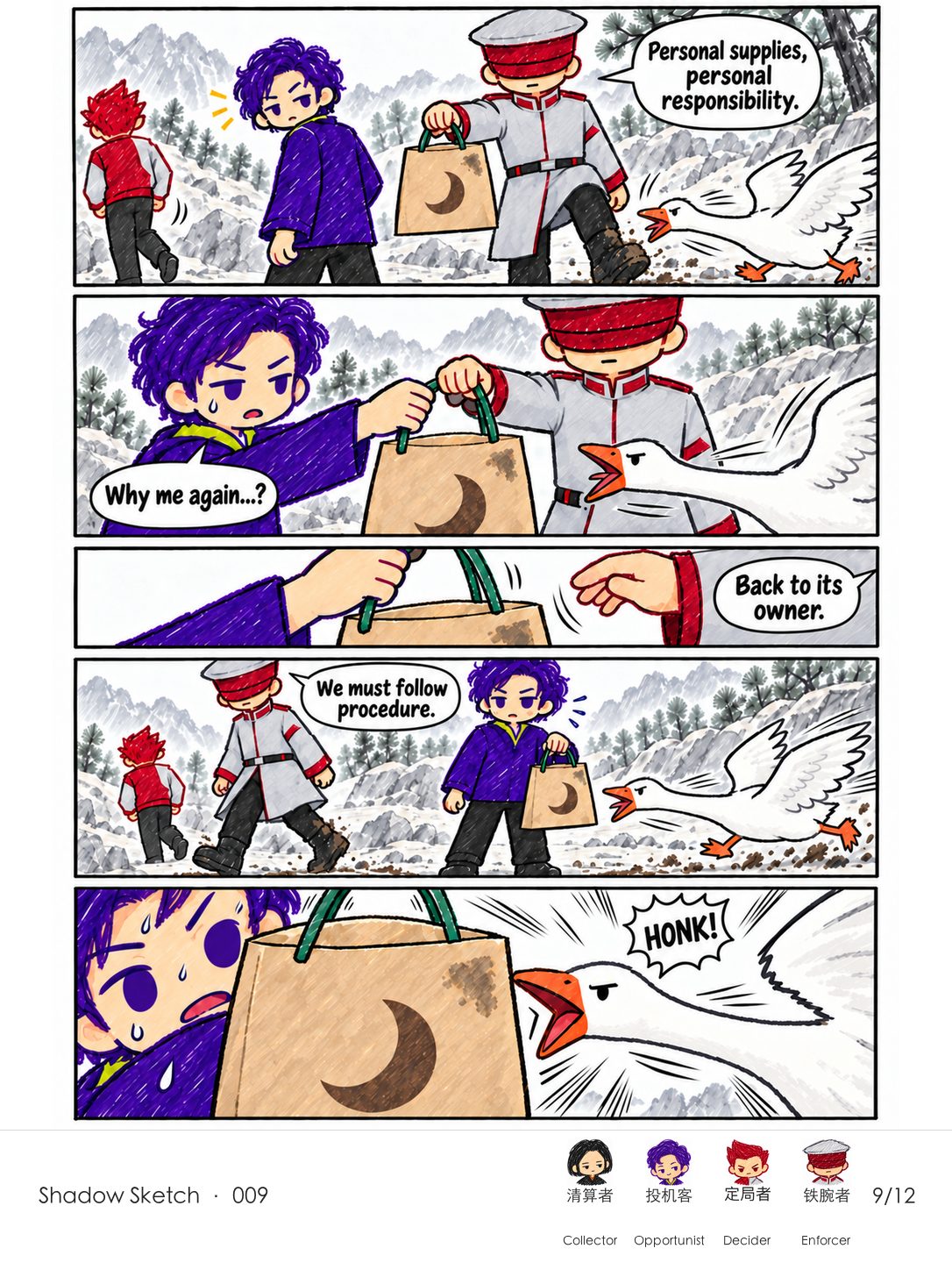
9. Return to Sender
Enforcer returns the responsibility to Opportunist, then continues downhill according to his process, leaving Opportunist face to face with the goose again.
Personal supplies, personal responsibility.
Why me again...?
Back to its owner.
We must follow procedure.
HONK!
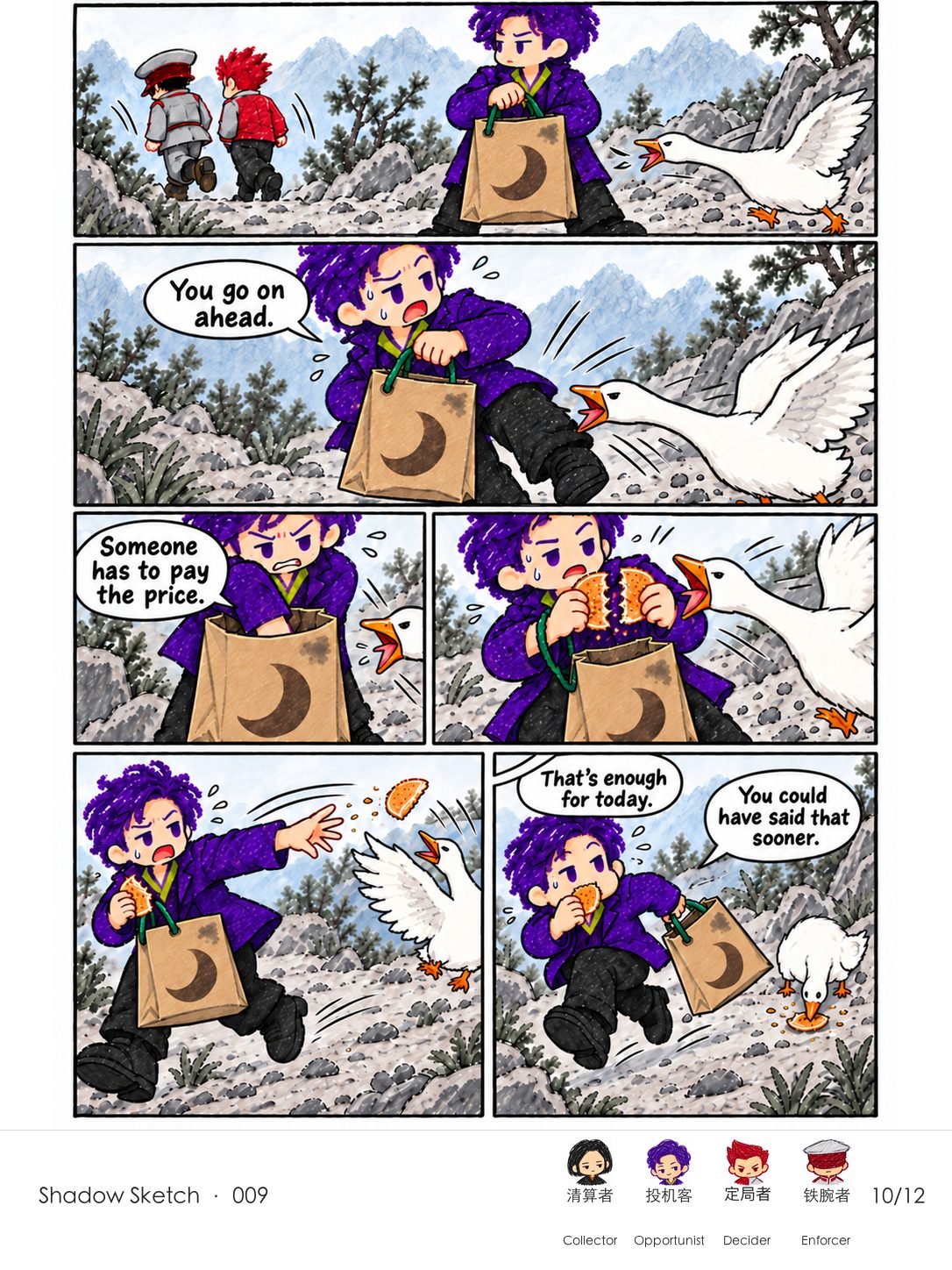
10. Someone Has to Pay
After the others have left, Opportunist pulls out the flatbread while the goose gives chase, throws half away, and runs with the other half in his mouth. The goose finally stops.
You go on ahead.
Someone has to pay the price.
That's enough for today.
You could have said that sooner.
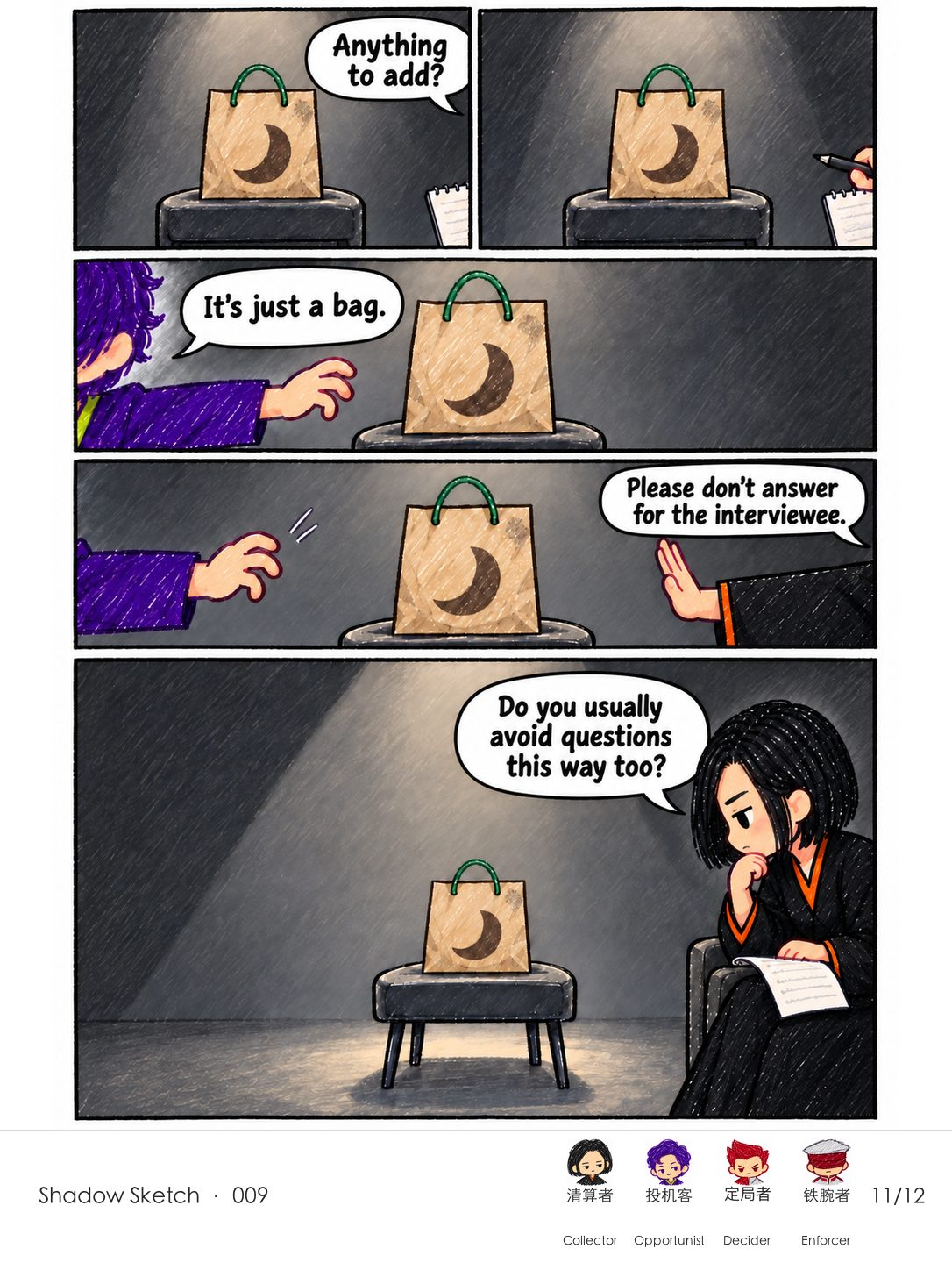
11. Still Avoiding the Question?
Back in the interview, Collector keeps questioning the paper bag. Opportunist reaches for it and answers on its behalf, so Collector stops him and keeps pressing.
Anything to add?
It's just a bag.
Please don't answer for the interviewee.
Do you usually avoid questions this way too?
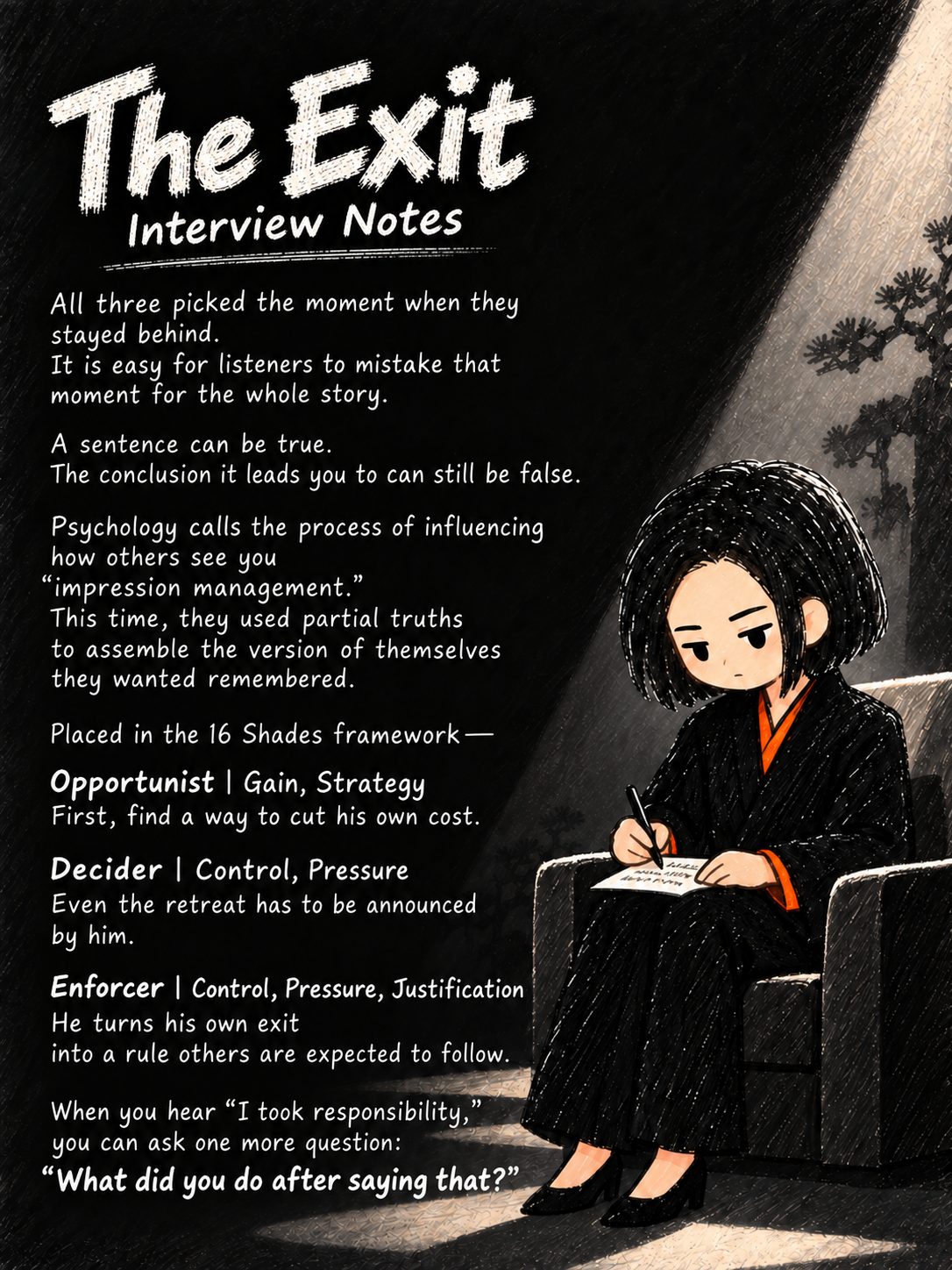
12. Interview Notes
Collector sits on the right, writing. Her interview notes examine how the three manage impressions with partial truths, connect their choices to the 16 Shades framework, and suggest asking what they actually did after claiming responsibility.
The Exit
Interview Notes
All three picked the moment when they stayed behind.
It is easy for listeners to mistake that moment for the whole story.
A sentence can be true.
The conclusion it leads you to can still be false.
Psychology calls the process of influencing how others see you
“impression management.”
This time, they used partial truths
to assemble the version of themselves they wanted remembered.
Placed in the 16 Shades framework—
Opportunist | Gain, Strategy
First, find a way to cut his own cost.
Decider | Control, Pressure
Even the retreat has to be announced by him.
Enforcer | Control, Pressure, Justification
He turns his own exit
into a rule others are expected to follow.
When you hear “I took responsibility,”
you can ask one more question:
“What did you do after saying that?”